
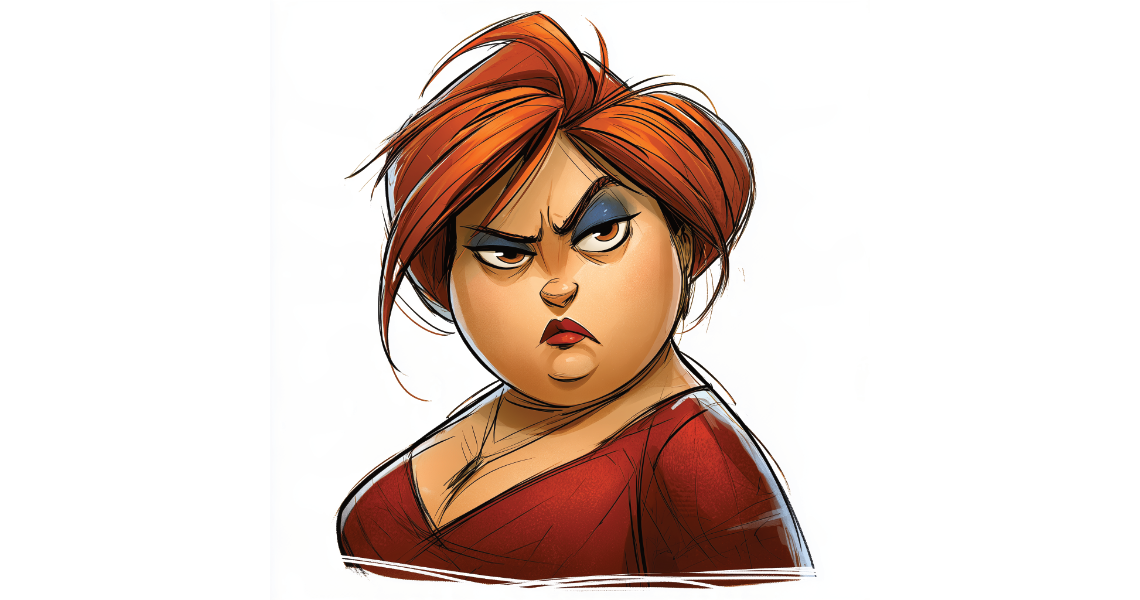
A person’s voice and body language can tell us more than the words they speak, so you should probably describe them in your stories. Plus, it’s a lot of fun to write. I do this all the time in my books, so I thought I’d write a post on it for the young writers out there.
Mix thoughts with body language
Let’s start with body language. That’s how a person’s body communicates what they are thinking. People rarely say everything they are thinking, but their body language can give them away. Let’s say a character gets really mad at someone. Of course, you could simply use your superpowers as the narrator to tell us her thoughts, like this: “She could feel her temper rising. She wanted to throw something.”
Or you could say the same thing by describing her body language.
“Her eyes flashed.”
“Her fists clenched.”
“A muscle twitched in her jaw.”
Another technique is to use a simile or a metaphor to compare her mood to something else:
“Her face hardened like concrete.”
“She was a storm cloud.”
It’s entertaining for your readers when you describe what your characters are feeling, but mixing up your descriptions will make the narrative even more interesting. Don’t worry if you don’t get it perfect on the first try, some of this rich description is added later on when you are editing your draft.
Ideas for describing body language
I find the easiest way to describe body language is to picture the scene as a movie. Imagine you have the camera and you are shooting a closeup of the character at that moment to show what they are feeling. (Fun fact: in a movie they can’t tell us what a character is thinking, so they have to come up with another way.) What would you choose to zoom in on? Often it’s the eyes, the face, or the hands. But it could also be the way they are standing or even their breathing.
She jerked upright.
Her eyes narrowed.
Her knuckles turned white.
Her breath was steaming.
If her face was any hotter it would have melted.
Tone of voice
A person’s tone of voice also communicates more than the words they say. When a character speaks, it is often worth adding the tone of their voice to show us their mood. Here’s a simple statement you might write as direct speech.
“Follow me,” he said.
It’s fine to write it this way if there is nothing we need to know about the character’s mood. But what if we change that?
“Follow me,” he laughed.
“Follow me,” he growled.
“Follow me,” he said in hushed tones.
“F-Follow me,” he stammered.
That communicates something totally different each time. This is another technique to make your story more engaging. You don’t need to do this every time someone speaks, just when their feelings are as important as their words.
Ideas to describe tone of voice
If you want a fun way to experiment with tone of voice, start with animal noises. Yes, I’m serious.
“I’m here!” she chirped.
“I’m here!” she squeaked.
“I’m here!” she barked.
“I’m here!” she hissed.
You get the idea.
I’ve added a scene below from The Ancient Machine when Georgie is confronted by Ms Crouch the orphanage mistress. Can you spot where I’ve used tone of voice or body language to make the scene more interesting?
The Ancient Machine by Justyn Walker is available on Amazon. Do me a fav and leave a review to help others find this book!

Another shrill note sounded. Stampeding feet rattled the floorboards as dozens of ragged orphans appeared out of the woodwork. The lipstick-smudged whistle fell around Ms Crouch’s neck. She tapped her toes on the floor impatiently as the fidgeting girls organised themselves into a line. Her hands rested firmly on her sizable hips, her double chin was held high, and her eyes meant business. ‘Listen, you miserable wretches, I am expecting company tonight!’ she barked, pacing up and down the line and trailing a red evening dress behind her. ‘You are all to behave like the young ladies I have brought you up to be. Make yourselves scarce, speak only when spoken to, and no funny business. If the gentleman so much as suspects what insolent little rodents you are, heads will roll! Have I made myself clear?’
‘YES, MA’AM!’ answered the girls in unison.
Ms Crouch hesitated as her eyes fell upon a trail of wet footprints. A girl was tiptoeing gingerly to the end of the line. ‘TANNER!’
Georgie froze. ‘(Gulp!) Yes, ma’am?’ she replied innocently.
A looming figure appeared above her, nostrils flaring. ‘Report card,’ snapped Ms Crouch.
Georgie’s face sank. She reached into her bag as one might reach into a bear trap. The other girls watched as a notable amount of growling and tugging ensued. With some difficulty, Georgie managed to wrench a partly torn report card out of the bag and place it into the awaiting hand of Ms Crouch.
The Orphanage Mistress studied the dreaded paper. A muscle twitched in her cheek. ‘I particularly like the part where they suggest sending you to the Foreign Legion,’ she concluded.
The other girls sniggered. Georgie felt like an ant under a magnifying glass. She looked up hopelessly, awaiting her punishment. Would she be locked in stocks, burnt at the stake, or stretched out on the rack until her arms were as long as a chimpanzee’s? A twinkle in those cold eyes told her Ms Crouch had made up her mind.
‘One month of gruel duty,’ said the Orphanage Mistress in a low voice.
One of the orphans fainted.